Talk to That Stranger: How a Random Conversation Can Unlock the Best Part of Any Trip

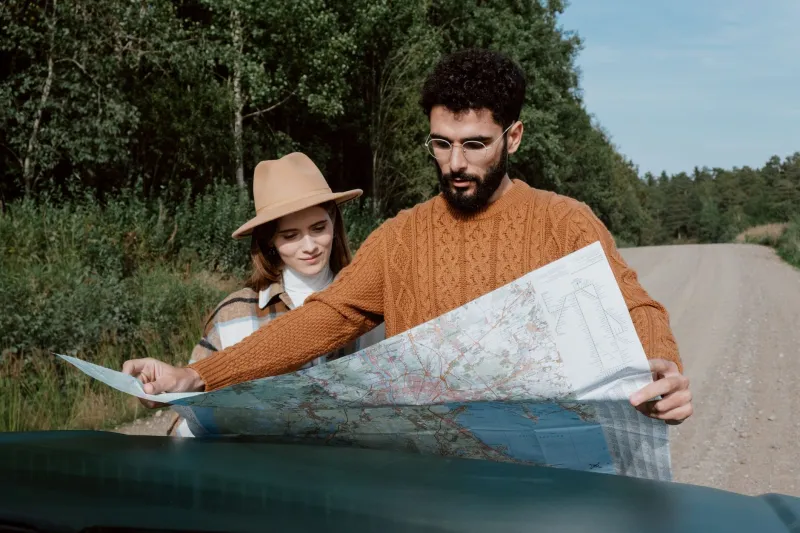
Photo: August Geyler, CC BY-SA 4.0, via Wikimedia Commons
You've done everything right. You spent three evenings down a rabbit hole of travel blogs, saved forty-seven places to your Google Maps list, and cross-referenced two different Reddit threads. Your itinerary is color-coded. Your backup plans have backup plans.
And then you land, step out onto an unfamiliar street, and realize — almost immediately — that no algorithm prepared you for this.
This is the part of travel that the internet can't replicate. The part that lives in a five-minute conversation with a bookstore clerk in Portland, a retiree waiting for the same bus in Savannah, or a line cook on a smoke break outside a restaurant in New Orleans. These people aren't on any list. They don't have affiliate links. And somehow, they almost always know exactly where you should go.
Why Curated Guides Miss the Point
Travel content — including the stuff we write here at Viastoer — is built on research, patterns, and broad appeal. A recommendation that works for most people in most situations. That's genuinely useful. But it's also, by definition, averaged out.
The stranger at the coffee shop isn't thinking about most people. They're thinking about right now. They know the farmers market only happens on odd Thursdays. They know the taco truck that's been parked on Fifth Street for the past two weeks is the best thing in the city. They know the rooftop bar everyone recommends has been slipping since it got written up in a national magazine.
That kind of hyper-current, hyper-local knowledge doesn't make it into guides. It can't. By the time a place gets researched, fact-checked, edited, and published, the moment has already shifted. Strangers live in real time. That's their edge.
The Psychology Behind a Stranger's Recommendation
Here's something interesting: people want to help. Especially when you're clearly not from around here and you ask with genuine curiosity rather than transactional urgency.
There's a well-documented psychological phenomenon sometimes called the "helper's high" — the small but real satisfaction people get from being useful to someone else. When a local tells you about their favorite hidden trail or the diner that's been in their family's rotation for twenty years, they're not just giving you directions. They're sharing a piece of their world. That matters to them.
And because it matters to them, they tend to be honest. They're not going to send you somewhere mediocre. Their recommendation is a small extension of their own taste and pride. That's a very different dynamic than a sponsored post or a five-star review that may or may not have been written by a bot.
How to Actually Start These Conversations
Okay, so you're sold on the concept. But walking up to a stranger and saying "hey, tell me where to eat" is a little awkward, even by American standards. Here's how to make it feel natural.
Start with context, not a question. Instead of leading with "what's good around here," try commenting on something in your shared environment first. The book someone's reading. The coffee drink they ordered. The neighborhood you're both standing in. A brief observation opens a door without immediately putting someone on the spot.
Be specific about what you're after. "Where should I go" is too broad and a little overwhelming to answer. But "I've got one night and I'm really into live music" or "I'm looking for a breakfast spot that's not on every tourist list" gives someone something to work with. Specificity invites a real answer.
Ask about their favorites, not the best. "What's the best restaurant in town" sounds like a quiz. "Where do you actually go when you want a good meal" sounds like a real conversation. The second version gets you somewhere personal. That's where the good stuff lives.
Don't over-explain your research. You don't need to preface the conversation with "I've already looked at TripAdvisor and Yelp and..." That signals you're looking for validation, not discovery. Come in curious. Come in open.
The Places Where This Works Best
Not every setting is equally ripe for this kind of interaction. You're probably not going to have a breakthrough conversation at a packed airport gate or in the middle of a crowded tourist attraction. But certain spots are practically designed for it.
Independent coffee shops are the gold standard. People linger. They're relaxed. There's a shared culture of slowness that makes conversation feel welcome rather than intrusive.
Bookstores — especially used or independent ones — attract a certain kind of thoughtful, engaged person who tends to have strong opinions about their city and genuinely enjoys sharing them.
Transit stops and train platforms are underrated. Waiting creates a natural pause, and a simple question about the neighborhood you're heading to can turn into a ten-minute tutorial from someone who's lived there for decades.
Farmers markets and neighborhood grocery stores are where real locals actually shop. Strike up a conversation at a produce stand and you might walk away with a dinner recommendation, a neighborhood tip, and the name of a festival happening that weekend.
What You Do With What You Get
Here's the part that separates the travelers who collect good stories from the ones who don't: you actually have to go.
It sounds obvious, but there's a tendency to take a stranger's recommendation, look it up, read the reviews, decide it's too far or too uncertain, and fall back on the safe option. Resist that. The whole point of this kind of intel is that it lives outside the review ecosystem. You can't fully vet it in advance. That's not a bug — that's the feature.
Go to the place. Try the thing. Walk the street someone described. The experience might be exactly what they promised, or it might be something completely different that still turns out to be worth the detour. Either way, you're moving through the city with a kind of intentional curiosity that transforms how you experience everything around it.
The Story You'll Actually Tell Later
Ask anyone about a trip that really stuck with them. Not the Instagram version — the real version, the one they tell at dinner parties years later. It almost never starts with "so I found this place on a top-ten list."
It starts with "I was waiting for coffee and this guy told me about..." or "we got talking to this woman at the market who said..."
The stranger's recommendation is a gamble, sure. But it's the kind of gamble that, win or lose, makes the trip feel alive. And honestly? That's what we're all out here chasing anyway.