One Weekend, No Plans, No Group Chat: What a Solo Trip Does That Two Weeks With Friends Simply Can't

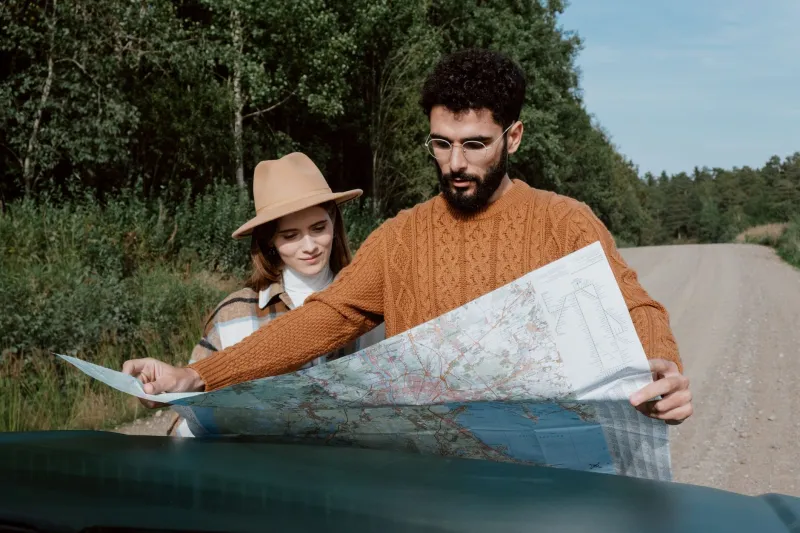
Photo by Photo by Diane Picchiottino on Unsplash on Unsplash
You just got back from ten days in Europe with your college friends. The Instagram grid looks incredible. The memories are real. And yet — somewhere between the third group dinner where everyone argued about the restaurant and the fifth morning spent waiting for the slowest packer in the crew — something in you quietly checked out.
You're home now. You don't feel rested. You feel like you need a vacation from your vacation.
Here's the thing nobody talks about enough: group travel, no matter how much you love the people involved, is fundamentally a social exercise. It's negotiation, compromise, and collective energy management disguised as leisure. And for a lot of us, that's not the same thing as actual restoration.
A solo weekend trip — 48 hours, one bag, one destination, zero group chats — does something categorically different to your brain and your sense of self. Let's dig into why.
Your Brain on Solitude (in a New Place)
Neuroscience has spent a fair amount of time studying what happens when we remove social input from our environment. The short version? It's good for you — in doses. Research out of the University of Rochester found that solitude, when it's chosen rather than forced, is associated with increased creativity, emotional regulation, and a stronger sense of personal identity.
Now layer a new environment on top of that. When you land somewhere unfamiliar, your brain shifts into what researchers call an "exploratory mode" — heightened sensory awareness, increased dopamine activity, and a kind of attentional reset that's genuinely hard to manufacture in your daily routine. You're noticing things. You're present. The mental noise that follows you around at home doesn't quite know your new address yet.
Combine chosen solitude with environmental novelty and you've got a recipe for something closer to a hard reboot than a simple rest day.
The Group Dynamic Tax
Here's a concept worth naming: the group dynamic tax. Every time you travel with other people, you spend a portion of your mental and emotional bandwidth managing the group itself. Who's hungry? Who's tired? Who's annoyed that we didn't make it to the museum? Who needs fifteen minutes to find a charger before we leave the hotel?
None of this is anyone's fault. It's just the nature of moving through the world alongside other humans. But it means that even on a "relaxing" vacation, a significant slice of your cognitive resources is being directed outward, toward other people's states and needs.
When you travel alone, that slice comes back to you. Completely. You eat when you're hungry, not when the group reaches consensus. You walk until you're tired, then stop. You linger in the weird little bookshop for forty minutes because nothing is stopping you. That freedom isn't just logistically convenient — it's neurologically restorative in a way that shared travel rarely replicates.
Why 48 Hours Is Often Enough
You don't need two weeks. You probably don't even need five days. For the specific kind of reset we're talking about — the kind that recalibrates your perspective and reminds you who you are when you're not performing for an audience — a weekend is frequently more effective than a longer trip.
Why? Because short trips create urgency without pressure. You're not trying to see everything. You're not building a two-week narrative arc. You show up, you move slowly, you pay attention, and then you go home. The constraint actually helps. It forces you into the present tense in a way that open-ended travel sometimes doesn't.
A reader who reached out to us put it better than we could: "I took a solo weekend in Savannah last March, just me and a notebook and absolutely no agenda. By Sunday afternoon I had figured out something about myself that two years of therapy hadn't quite cracked. I think it was just... the quiet. And the fact that I didn't have to explain myself to anyone."
That's not a fluke. That's the mechanism working exactly as designed.
Building Confidence in Real Time
There's a particular kind of competence you develop when you navigate a city alone. You make a decision, it works (or it doesn't), and you absorb the result without commentary from anyone else. You figure out the transit system. You find a great restaurant by walking until something looked right. You get a little lost and find your way back.
These are small things. But they stack up quickly, and they have a way of following you home. People who travel solo — even occasionally, even briefly — consistently report higher scores on measures of self-efficacy and decision-making confidence. When you spend 48 hours being entirely responsible for your own experience, you remember that you're actually pretty capable of handling things.
Group trips, for all their joy, can quietly erode that. When someone else always books the restaurants or navigates the subway or handles the hotel check-in, you don't get the reps. Solo travel gives you the reps.
Where to Go for Your First Solo Reset
If you've never done this before, the destination matters less than you think — but a few principles help. Choose somewhere within a reasonable drive or a short flight. Somewhere with enough density and character to reward wandering, but not so overwhelming that you spend the whole weekend feeling like you're missing things.
American cities like Asheville, NC, Marfa, TX, Portland, ME, Savannah, GA, or Santa Fe, NM tend to work well for this kind of trip. They're walkable, they have strong local food and coffee culture, they're interesting without being exhausting, and they carry a certain atmosphere that makes it easy to slow down.
Book one night at a hotel or inn you genuinely want to stay in — not the cheapest option, not the most Instagram-friendly, just somewhere that feels right to you. Leave the itinerary mostly blank. Bring a book, a notebook, or nothing at all.
The Point Isn't to Be Lonely
It's worth saying clearly: solo travel isn't about isolation or running away from the people you love. Your friends are great. Group trips are genuinely fun. None of that is in question.
The point is that your relationship with yourself — your instincts, your preferences, your sense of what actually makes you feel alive — needs maintenance too. And that maintenance is hard to do when you're constantly in conversation with other people's needs and rhythms.
A solo weekend is basically a tune-up. It's 48 hours of operating on your own frequency, without interference, in a place that doesn't know your history or your habits. That's not lonely. That's clarifying.
And more often than not, you come home from it genuinely ready to be around people again — which, if you think about it, might be the best argument for solo travel there is.