Burn the Bucket List: How Letting Go of Must-Sees Finally Made My Trips Worth Taking
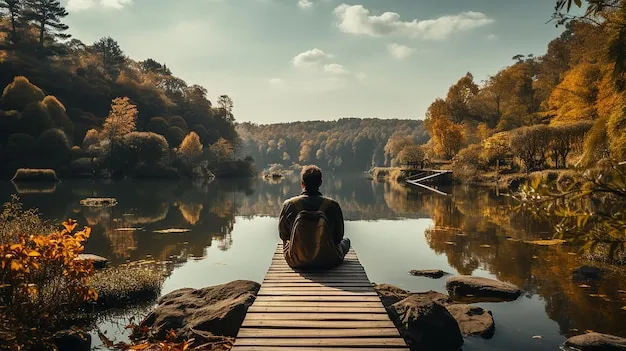
Photo: traveler sitting alone quietly in scenic location without phone or camera, via img.freepik.com
Somewhere between pinning the Eiffel Tower to a mood board at age nineteen and standing in front of it at thirty-two, surrounded by a thousand other people doing the exact same thing, I had a quiet, uncomfortable thought: I don't actually want to be here.
Not in Paris. Paris was fine. But standing in that specific spot, at that specific angle, waiting for the light to hit just right so I could post a photo I'd essentially already seen ten thousand times — that part felt hollow. I'd checked a box. I hadn't had an experience.
That was the moment I started questioning the entire bucket list mentality, and honestly, I haven't looked back.
Where the List Comes From (and Why That Matters)
Before you can ditch the checklist, it helps to ask where it came from in the first place. Pull up your own list — whether it lives in your phone notes, a Pinterest board, or just the back of your brain — and trace each item back to its origin.
Was it a movie? A friend's Instagram story? A "Top 10 Things to Do in [City]" article you skimmed five years ago? A travel magazine your dentist had in 2009?
For most of us, the bucket list is less a reflection of personal desire and more a greatest hits compilation assembled by other people's enthusiasm. We absorbed these destinations the way we absorbed pop songs — passively, repeatedly, until familiarity started feeling like longing.
That's not nothing. Curiosity has to start somewhere. But there's a real difference between wanting to go somewhere because something genuine draws you there and wanting to go somewhere because not going feels like falling behind.
The Instagram Problem Nobody Wants to Admit
Social media didn't invent the bucket list, but it turbocharged it in a way that warped our travel instincts. Now there are specific hiking trails — Horseshoe Bend, the Wave in Arizona, Antelope Canyon — that have waitlists not because they're the most rewarding outdoor experiences in the American Southwest, but because they photograph spectacularly.
That's not a criticism of the places themselves. They're genuinely stunning. But ask yourself honestly: if photography didn't exist, would those same spots rank at the top of your list? Or would you spend that day somewhere quieter, somewhere that asked more of you and gave back in proportion?
The must-see list, at its worst, optimizes for shareability rather than experience. And when you're chasing shareable moments, you're not actually present in the place you paid a lot of money and vacation days to visit.
What Happens When You Erase It
I'm not suggesting you travel with zero intention. That's a different kind of exhausting. What I'm suggesting is replacing the checklist with a set of questions.
Instead of "What are the top things to see in Nashville?" try asking: What kind of experience do I actually want to have? Do you want to feel surprised? Do you want to eat something you've never tried? Do you want to talk to people who've lived somewhere their whole lives? Do you want to move slowly or cover ground?
Those answers will lead you somewhere more interesting than any "must-see" list ever could.
When I started traveling this way — building itineraries around curiosity and personal appetite instead of obligation — I ended up in a bait shop in coastal Mississippi talking to a retired shrimper for two hours. I spent an afternoon in a Cincinnati neighborhood I'd never heard of eating food I couldn't have named beforehand. I took a wrong bus in New Orleans and stumbled into a second-line parade that wasn't on any tourist map.
None of those things were on a list. All of them are things I still think about.
The Reverse Bucket List Is Actually a Practice
Here's the exercise: take your current list of travel destinations or experiences and, next to each one, write down why you want to go there. Be specific. "Because it's beautiful" doesn't count. Beautiful is everywhere.
If you can't write a specific reason — something rooted in genuine curiosity, a personal connection, a question you want answered by being there — consider crossing it off. Not forever. Just for now. Let it earn its way back onto the list.
What you're left with after that edit is something far more valuable than a bucket list. It's a map of what you actually care about.
Curiosity Beats Clout, Every Time
The best trips I've taken — and the best trips I've heard other people describe — share a common quality. They weren't built around seeing the right things. They were built around following a thread of genuine interest until it led somewhere unexpected.
A friend of mine spent ten days in New Mexico last fall chasing a specific interest in Indigenous pottery traditions. She didn't hit a single major tourist landmark. She came home changed in a way that a checklist trip to the same state almost certainly wouldn't have produced.
That's the thing about curiosity-driven travel. It scales with you. It meets you where you are. A bucket list is static — it was built by a version of you that existed before you knew better. Curiosity updates in real time.
Give Yourself Permission to Want Less
There's a quiet cultural pressure to maximize every trip — to see everything, do everything, optimize every hour. The bucket list is a symptom of that pressure. It tells you that the point of travel is accumulation: more countries, more landmarks, more boxes checked.
But travel at its best isn't about accumulation. It's about attention. And you can only pay real attention to one thing at a time.
So burn the list. Or at least set it down for a while. See what you reach for when no one's keeping score — including you.